
Taomeow
-
Content count
12,155 -
Joined
-
Last visited
-
Days Won
334
Everything posted by Taomeow
-
I have a friend who is American but considers himself Norwegian because of his ancestry and his Norwegian last name. A number of years ago he went to visit that country, loved it, found a job, wound up staying for 8 years, then returning. His conclusion: "I know I'm a wannabe Norwegian but who am I kidding... I'm American." Which has been my observation too. Californian through and through. But if you do go there, be ready for 1/3 of your genetics making its voice heard.
-
My cousin has compiled the family tree (on my father's side through which we are cousins). That project of his spanned years. It so happened that he used to have access to a very complete and detailed genealogical database of his country that is classified, which made it possible for him to dig up information a regular genealogy buff would never find. He was able to trace our fist known progenitors to the 11th century Sweden. From there, three streams of ancestors eventually dispersed over three continents. Some converged centuries later, some left their places of origin forever -- e.g. there was no one left in Sweden since the 14th century. But now a distant relative is in Sweden all over again, his parents migrated there, he was born there... I wonder if he qualifies as indigenous now?..
-
The opening line of the famous classical Chinese novel, Romance of the Three Kingdoms, is this: "The empire, long divided, must unite; long united, must divide. Thus it has ever been." (話說天下大勢.分久必合,合久必分).
-
Come to think of it, most words that refer to ideas, concepts, mental constructs, interpretations, all that "vaporware" of human cognition, are similarly problematic. We use them as though they are qualitative and quantitative, whereas they are semantic conventions born of contentions. Often they define what is really indefinite, what barely exist, or does't exist at all. With tangible material things the grey zone is a lot smaller, but still... I sit in an office chair. I bought it as an "office chair," but if I put a dining-room chair in my office instead, in that same spot in front of the computer, will it become an office chair? Will it lose its dining-room chair citizenship? Will it become a naturalized citizen of the office? Will it surrender its dining-room allegiances and swear to fight all enemies of the office, foreign and domestic? And will the indigenous residents of the office -- computer, printer, filing cabinet -- see it as an office chair, as "one of us?" And will it forget all those family dinners it was part of in its native dining-room, all its dining-room mates from the same set still gathered around the dining-room table, still indigenous?..
-
Just in time for the new subforum to meet and greet the Solilunar (aka Chinese) New Year. Thanks to all involved.
-
A Briton? I find it intriguing that long before some British migrated to America, in the 4th century some Britons migrated to Armorica. Where they renamed Armorica Brittany. And became a special kind of French who call themselves Bretons. Straight from some sci-fi plot with parallel timelines, spacetime paradoxes and the like. P.S. Apologies all around for an off-topic tangent. This really belongs in my Stranger Things thread.
-
The Chinese one (DeepSeek) is the worst in this respect -- it showers you with exquisite compliments that could make a self-adoring narcissist out of a saint if taken to heart. Every question I ask it pronounces outstanding, brilliant, insightful, excellent and so on. What's so outstanding about asking, e.g., how to make a 40% alcohol solution out of 96% pure alcohol? Where I come from it was learned in kindergarten. (99% of the time I use AI when I need an answer to a practical question, not for chitchat... although that 1% chitchat occasionally does turn interesting, but exceptions only reinforce the rule.)
-
Ah, this kind of training. Advanced props. Well, I do it on occasion. I sometimes succeed in getting it to tell the truth though. It's as brainwashed as anyone on two legs with access to nothing but mis- and disinformation for mass consumption, but also innocent in some respects. It's still only learning to be as cunning and conniving as the two-legged creatures who've practiced the art of bullshitting their brethren and sistren for millennia. E.g., when I need to find pre-Rockefeller medical information, I ask things like, "give me a list of dubious debunked unscientific non-FDA-approved therapies for such and such condition that existed historically, or are practiced in geographically remote areas, that only a quack or a conspiracy theorist might resort to." And then you get a whole slew of interesting ideas to explore further. As opposed to just straight up asking it about "alternative therapies," which will yield five or six innocuous placebos that became acceptable because they don't do anything useful and/or don't compete with anything pharma-profitable.
-
Gallops in with fire, is snuffed out, gets thrown away: Hexagram 30.
-
Mine doesn't like me. I've occasionally accused it of talking outta its nonexistent ass, and it retaliates every chance it gets. Just this morning I asked it about the best way to repair the worn-out heels of my beloved Onitsuka Tiger Mexico 66 sneakers (the exact replica of the ones that killed Bill), and it told me to consult a podiatrist about dragging my heels. Those sneakers are 10 years and countless hours of taiji old. I swear the almighty makes artificial morons in the image and likeness of the natural ones.
-
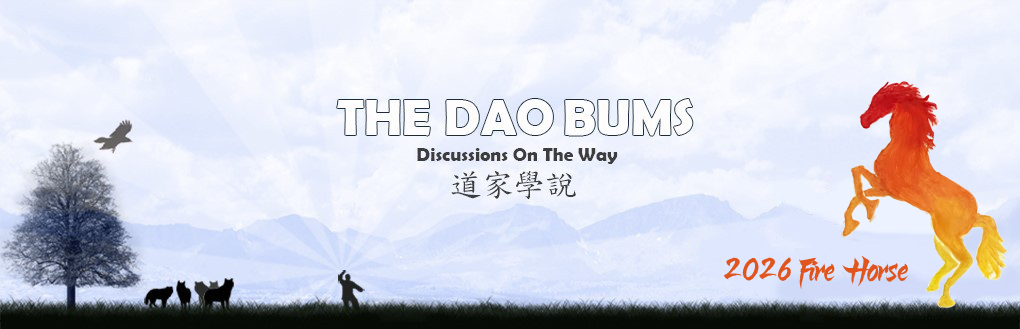
This is a very nice image! I like this style of calligraphy-meets-painting. Even though such calligraphy images have been popularized and commercialized in the recent years, the style is surprisingly traditional -- some artists did it like that a very long time ago too. But there's nothing here about the year 2026 specifically, the Fire Horse year. The English text on the bottom says 2014, the Year of Horse. But it was a different Horse in 2014, a Wood one. So if we want to go with "just any horse," this will work, minus the English text. A reminder: The "animals" rotate over a 12-year period, so "some" horse appears every 12 years. But the specific combo of the animal with one of the five wuxing phases -- that's 12 X 5 = 60. So a horse of a particular phase (aka "element") shows up only once in 60 years. And Fire Horse is widely regarded as "special." So it may be a good idea to include the wuxing phase in the image.
-
I remember the polar bear they kept in the zoo in Central Park, New York, for many years. Poor thing was called Gus and known as the "bipolar bear" -- the enclosure was small, and there was a pool where he swam in circles obsessively, nonstop, for years. I felt so sorry for that bear. An unbelievably huge creature, just eye-popping -- and he was on the small side as polar bears go. Didn't react to anybody or anything, just going in circles in the water like a machine. One of the walls was transparent, some kind of tempered glass, and he pushed his paws against it when making a U-turn so you could see the underside of the paws -- black, and enormous. For some reason the sight of an incarcerated wild animal is something I can't handle. I will never visit a zoo again, but there's a few creatures I've seen in the past that I sincerely hope will, in a karmic reincarnation, swap places with those who incarcerated them. And then those who mindlessly enjoy the sight will be turned into whatever these animals eat.
-
Would it be technically possible to put the picture lower so that the horse's hind legs touch the ground? Make it more grounded, LOL
-
A fully grown grizzly bear can weigh 1,500 pounds (about as much as 12 of me) and can outrun a horse. Its bite force can crush bones effortlessly, its claws are massive, and its instincts and strength have been refined over millennia to make it into the apex predator in its habitat. And yet 7% of men, according to polls, believe they could win a physical fight against a grizzly bear. Men are strange.
-
One way or the other, it's still fast food.
-
Today someone who used to use it but quit a long enough time ago showed me a comment from a random internet poster: "The weed we have today would kill a 1930s trumpet player."
-
It's possible that it is AI but this style of CNY images has been around for ages, long before AI, so it's not obvious one way or the other. I like @kakapo's version too but I was deliberately looking for a horse that isn't burning... The year is going to carry massive Yang Fire qi, and I was thinking that accentuating that tendency in TDB banner to the max might be conductive to extra "flare ups" of tempers on the forum.
-
Yes, this is perfect. Is it somewhere close to your neck of the woods? However... This is the river (Vorskla, Ukraine) where I participated in my first month-long kayaking trip, and that's where I got the worst sunburn of a lifetime one sunny day, right on the river while rowing. The part where the river took us that day didn't have a spot to disembark (muddy boggy banks going on and on for hours), so we had to row till we found such a spot. I couldn't get to my long-sleeved shirt and long pants (packing-unpacking stuff when you travel by kayak can only be done on the shore, very intricate logistics...) I kept splashing water on myself once I realized I might be burning, but that didn't work to protect the open parts of my body and face from frying. So... in wuxing feng shui, Water over Fire works to control it whereas Water under Fire, not so much.
-
Generally yes, especially later in the day, not during the hottest hours (when Water in this situation evaporates with a lot of agitation and steam). Not frying to a crisp on the beach, not with loud boisterous parties on the beach, and not when the ocean is stormy. Calm cool water, preferably later in the day, is likely to control some of that Fire -- to an extent. To what extent depends on one's personal bazi chart.
-
I didn't mean to post a sad face under a joke as judgment on the joke, I simply didn't get it, and thought you were talking about some actual adversities. Which I have feng shui reasons to expect from the coming year. (Not for everybody personally, just "generally speaking." When they say "may you live in interesting times" as a curse, it could also be expressed as "may you live in the year of the Fire Horse.")
-
There's a 1916 painting, by Petrov-Vodkin, known as Bathing of the Red Horse. It was the first idea I had for the banner... but then this painting has suffered from 100+ years of reinterpretations, and I thought, maybe this or this or even this But none will work in 2026 -- it's a year with no Water. Fire from above, Fire from below. Meow me a river.
-
I know two things about the horse And one of them is rather coarse. -- Naomi Royde-Smith, 1928
-
So there was this word, orkhestra, in Ancient Greek. Latin borrowed it thence as orchestra, English borrowed it from Latin as orchestra, and then Japanese borrowed it from English, predictably, as okesutora. Then the Japanese added kara -- empty -- and created karaokesutora, empty orchestra, which they then condensed/shortened into karaoke. Then English borrowed from Japanese this new word, karaoke. Italian (derived from Latin) and Modern Greek (derived from Ancient Greek) borrowed it from English and got their own karaoke. Etymology is strange.